

Identity Crisis
On arts funding and playing the hand I’ve been dealt.


What is the relationship between the identity of an artist and that artist’s work? I’ve been asking myself this question because I recently applied for a grant that was only available to artists who self-identify as LGBTQ+.
I suppose an arts grant restricted to a single demographic reveals one aspect of the relationship between an artist and identity: if an artist possesses identity traits preferred by a funder, the artist has an opportunity to benefit financially. Does this mean the arts funding game is rigged? If so, what does it say about me if I sat down at the table and played anyway?
The Stacked Deck
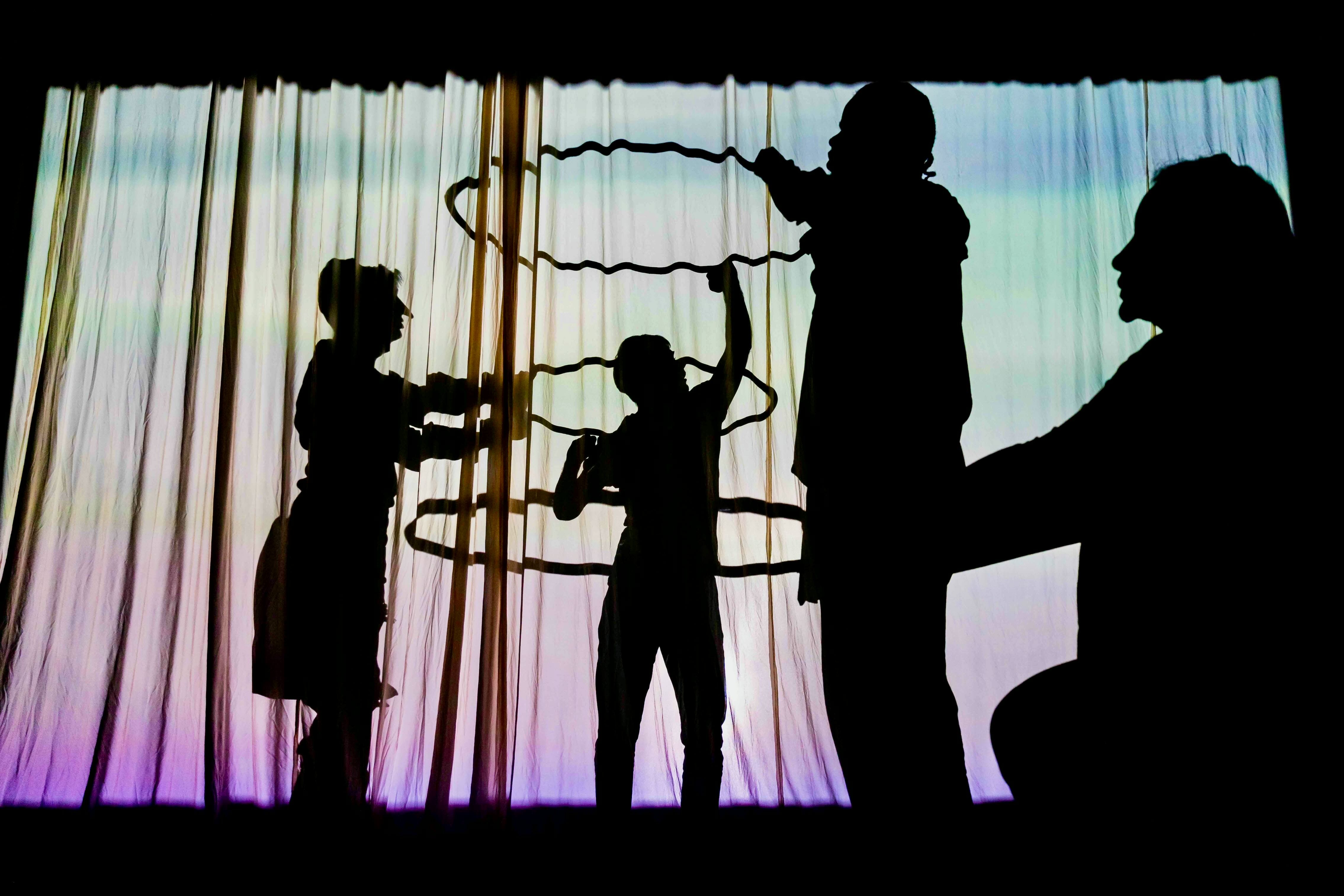
I’m a theater director who self-produces independent productions outside of well-funded legacy arts institutions, which means I’m responsible for covering the costs of both the process of creating the piece and the costs of presenting the final product. In a perfect world, each show nets a profit that funds the next. My world is less than perfect—applying for grant funding has been a necessary part of the process for each show I’ve produced.
When I write grant applications, I try to describe my project in a way that makes it vivid and vital so that strangers on an evaluation panel say, “We have to fund this play!” Grant applications have to be written that way because there are dozens, sometimes hundreds of worthy arts projects competing for the same small pool of money. The stakes are high: if my application persuades, I can mount a production. If not, there won’t be a show at all.
Having self-produced and directed three plays, I have a body of work that demonstrates my aesthetic, the themes I’m drawn to, my ability to complete a project, and my artistic development. It seems reasonable to assume that these are the primary terms on which applications are evaluated, and that the odds are in my favor. But as I learned in the days leading up to the pandemic, a wider set of considerations that can impact funding decisions are now in play.
In early March 2020, I was thrilled to have a meeting with an arts consultant about a draft of a grant application for what would later become my first self-produced play. This consultant had decades of experience advising theater professionals across the country. I was sure he could tell me exactly what I needed to say to put my project in the strongest position to secure funding.
I bounced into the meeting room and enthusiastically explained the show I wanted to make—a visually rich, ensemble-driven piece created collaboratively with designers and performers in the room together from the very beginning.
My excitement caught fire, and the consultant lit up with a solution: he told me to apply to a well-known theater in downtown Manhattan that had a long history of developing exactly the kind of experimental, collaborative work I described.
My exuberance deflated. I told him I had already looked into that theater, only to discover its incubator program exclusively accepted applications from artists of specific racial demographics—and I was not holding the right cards.
The consultant’s demeanor darkened. After a heavy sigh he said, “I feel bad for you. I really do.” That cold March afternoon, the consultant explained the new rules of the game: preferences for specific identity groups had been introduced as an additional layer of consideration for arts funding, he said, and it would be a difficult hurdle for me to navigate. The consultant predicted funders would eventually move on from preferred identity groups, but this was going to be the reality for the foreseeable future.
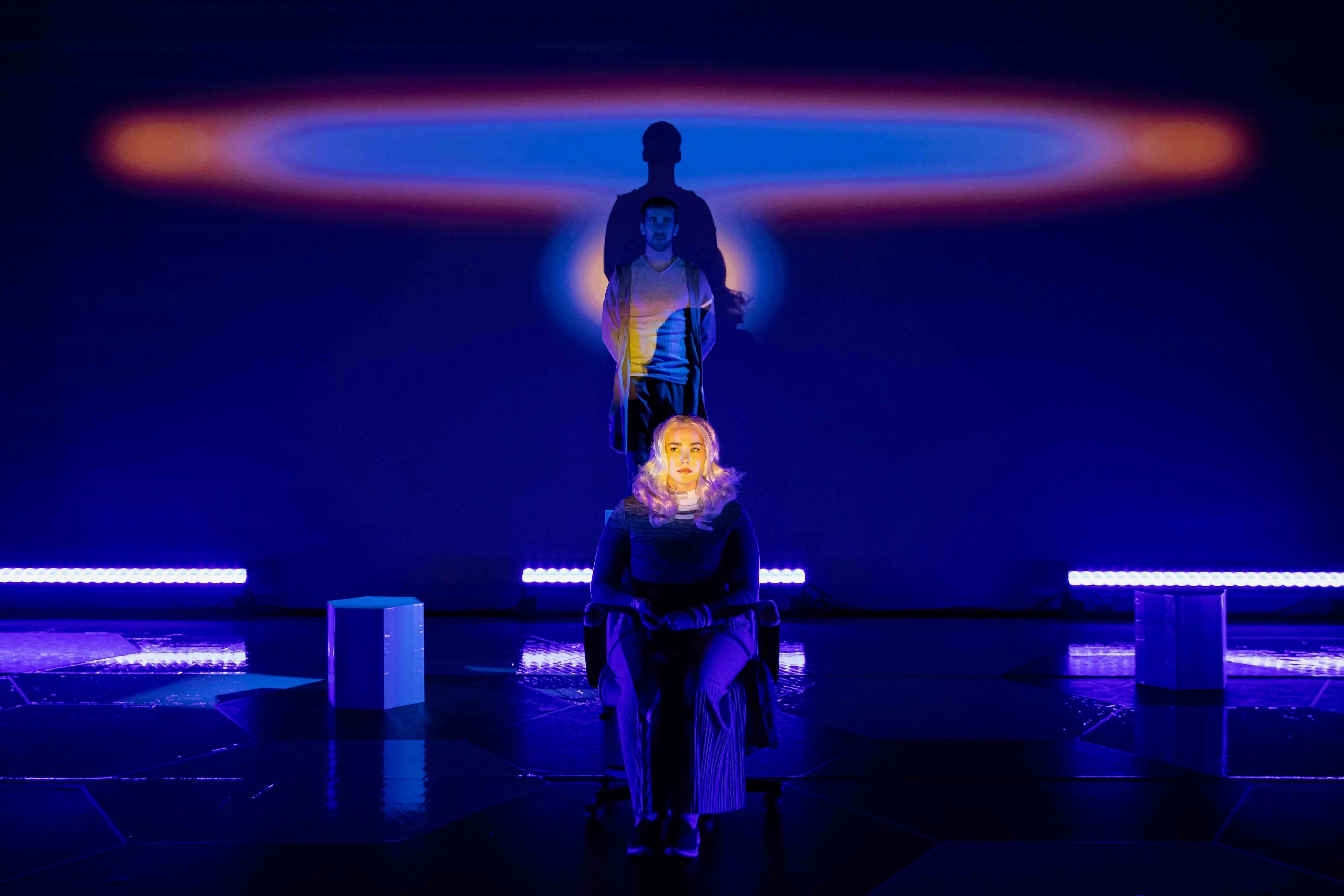
In the years since, I’ve applied for funding from numerous grant programs described not only as efforts to support artists, but also to advance ideas like equity, diversity, inclusion, accessibility, community impact—even to “center” artists from specific demographics. Others used broader terms, such as supporting artists whose work emerges “from lived experience at the margins.”
In one recent application, artistic merit accounted for only 25% of the evaluation rubric. The remaining 75% evaluated factors such as identity and community impact, with equity criteria suffused across more than one category.
Organizations have every right to establish whatever criteria they believe serve their mission. What I found concerning was the way a program described as an arts grant distributed evaluation across multiple non-artistic categories that must coexist within one arts project. If advancing equity is the primary objective, why not describe the program as an equity grant that uses art as its vehicle? Since it was described as an arts grant, I applied. But writing the application sometimes felt like sitting at a card table where more than one game was being played at the same time—each running by different rules—and I could not figure out what counted as a strong hand.
Hard as I worked on my application, it was not successful. When the list of recipients was published, I noticed a pattern: the funded organizations frequently defined themselves through a particular community or constituency as much as through an artistic practice. They uplifted specific racial or ethnic groups, served neurodiverse or disabled people, supported trans and non-binary artists, or created work that engaged the elderly or very young. Whatever distinguished them artistically, many of the funded theater projects organized their missions around a clearly articulated community identity. By contrast, my own company has always been organized around an artistic identity.
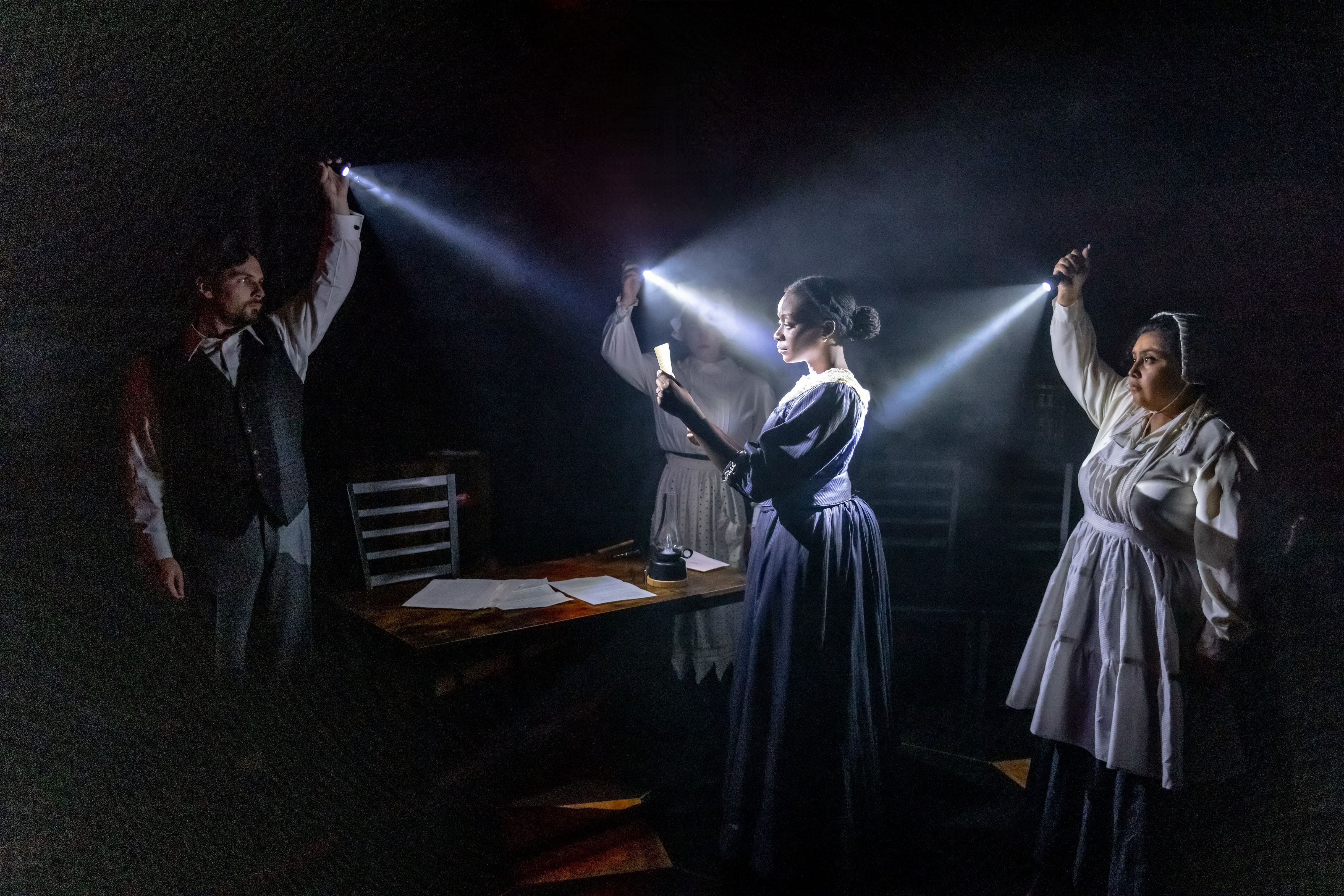
Another example made me think about how these priorities can extend beyond individual grant programs and into an organization’s overall structure.
Last month an email landed in my inbox with a job posting from an organization that funds independent theater. This organization’s stated mission includes the “active redistribution of resources” to preferred identity groups. The job posting was for a grants manager. Language in its description indicated the person the organization sought to hire was expected to share and advance its mission, which includes a commitment to equity, anti-racism, and other social justice principles. Notably, this grants manager would oversee the organization’s signature award, which requires recipients to commit to using the funds to compensate artists from identity groups the organization identifies as historically excluded from funding.
As I traced this organization’s priorities, from its mission statement to its hiring criteria to its grant eligibility, I noticed a top-down framework that made me wonder: does this organization operate as an arts institution or an arts casino? Is it possible the house has weighted the deck?
Can a Gambler Have Principles?
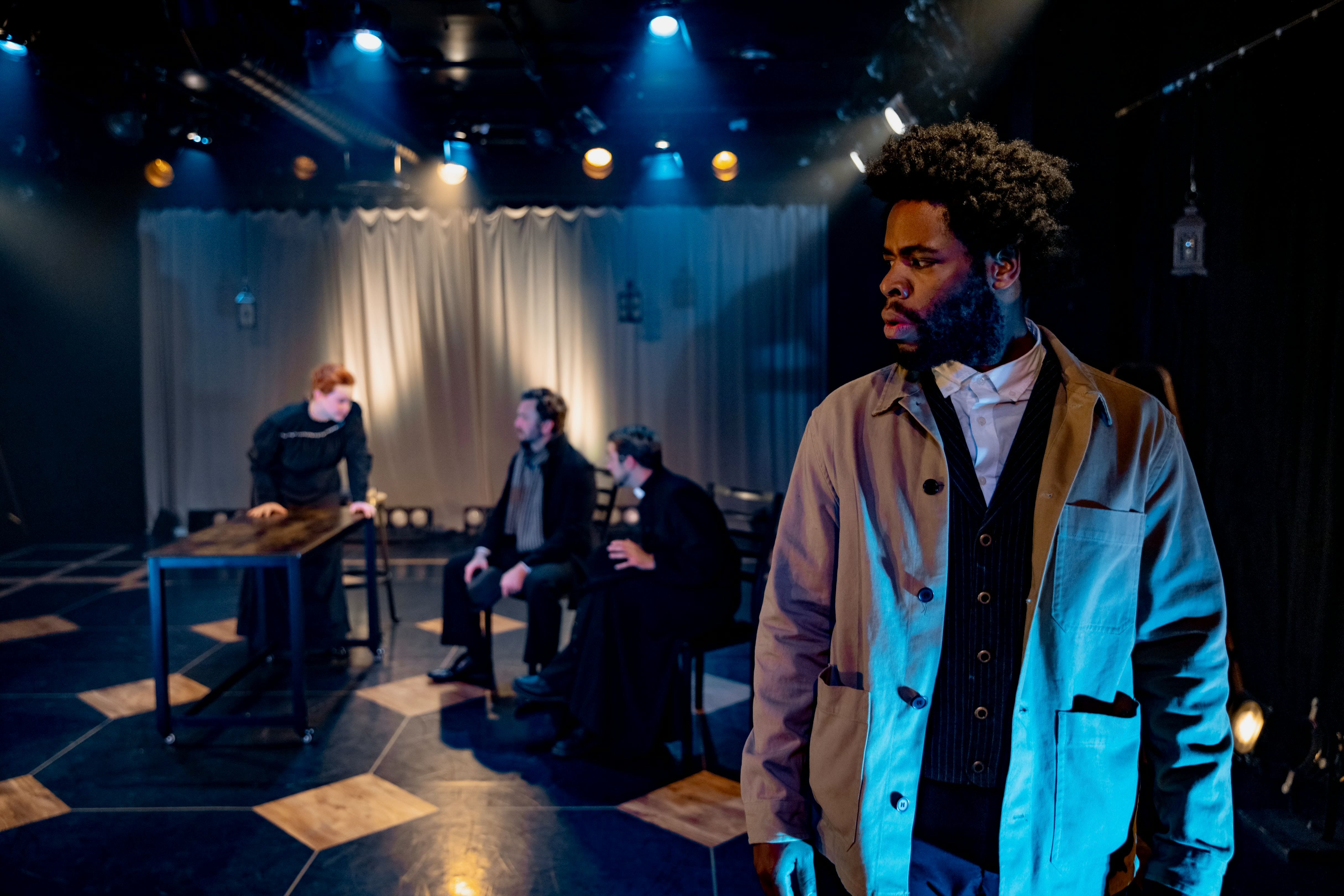
I understand there are good intentions behind gestures toward diversity. I’m well aware that the American theater has a long history of producing work by, for and about the majority population. I’m also aware that theaters across the country once restricted access based on identity. I don’t believe the past should be ignored. It should be looked at with clear eyes so that the failures of our predecessors can point us toward a better future.
To that end, I don’t believe the mistakes of the past should be repeated. While it is true many talented artists were historically barred from the theater because of their identity, I don’t believe turning the tables of exclusion creates a more inclusive arts ecosystem. In my view, inclusion means inviting more people inside, not sorting and discarding by race, sex, age, sexual orientation, or any other immutable characteristic.
If artists learn funding criteria tend to reward identity, what kind of work does that incentive produce—and how might it inform what audiences come to expect?
In my view, if a grant panel takes the identity of an artist into consideration, it should be illuminating, but not a determining factor in deciding whether or not an artist is worthy of financial support. There are more insightful criteria for evaluating an artist’s work, such as craft, innovation, resonance, transcendence, or timelessness. Does the artist’s work reveal a great truth about what it means to be human in a way that hasn’t been done before? Does it capture something about this moment that will speak to future generations? Has this artist dedicated a great amount of time and resources to understanding how his art works, and how he can evolve his practice?
When I go to the theater, I care less about the identity of the artists who created the show, and more about whether or not the show made me think because I felt something profound.
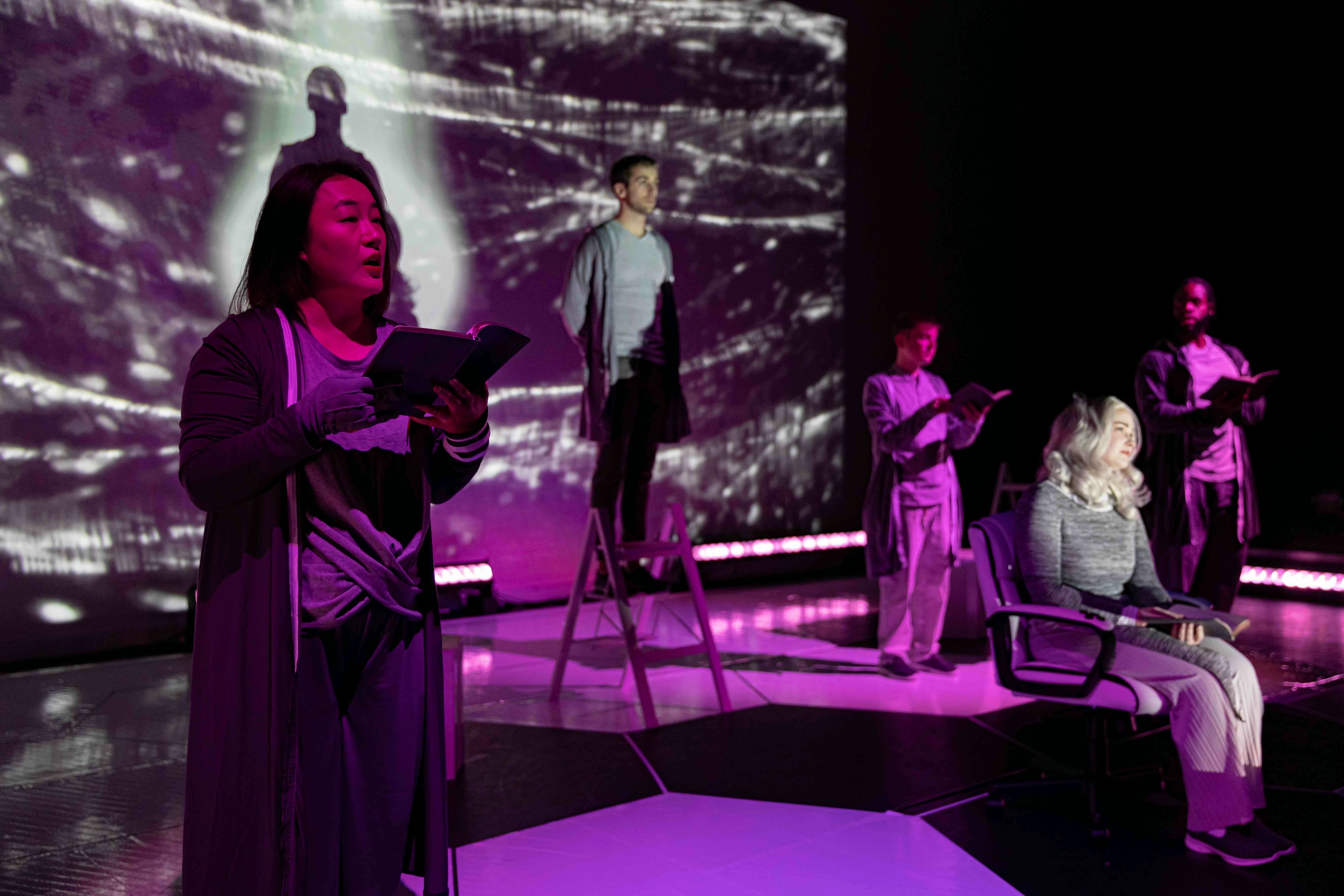
My views on the merits of identity in relation to arts funding are not fashionable. Most artists I meet are less than enthusiastic about engaging with me in a conversation about my perspective. The few who do will only speak in whispered tones behind double-locked doors.
But recently, I came across a documentary featuring author and raconteur Fran Lebowitz and nearly jumped off my couch when the documentary turned to her views on identity and culture. As Lebowitz, in her no holds barred fashion, declares in Public Speaking (2010):
What we have had—in the last like thirty years—is too much democracy in the culture, not enough democracy in the society. There’s no reason to have democracy in the culture. None. Because the culture should be made by a natural aristocracy of talent… by which I mean it doesn’t have to do with what race you are, or what country you’re from, or what religion you are. It should have to do with—how good are you at this thing?
What stood out was Lebowitz’s willingness to breezily say this on camera sixteen years ago. Today that would be verboten. Yet the timeless truth in her observation deeply resonates with me—the idea that artistic success is ultimately determined by talent, skill, persistence, and sacrifice.
I believe in democratizing the arts by offering funding to economically disadvantaged artists, but I am skeptical of frameworks that appear to organize opportunity primarily around identity.
To Lebowitz’s point about ability: I think I’m good at making theater. It is a craft-based art, which means the only way I can evolve from a good theater maker to an excellent one is to make as much theater as I can in my lifetime. That requires time and money. For that reason, I’ve reluctantly deployed my identity in grant applications—more than once.
Playing Identity Cards
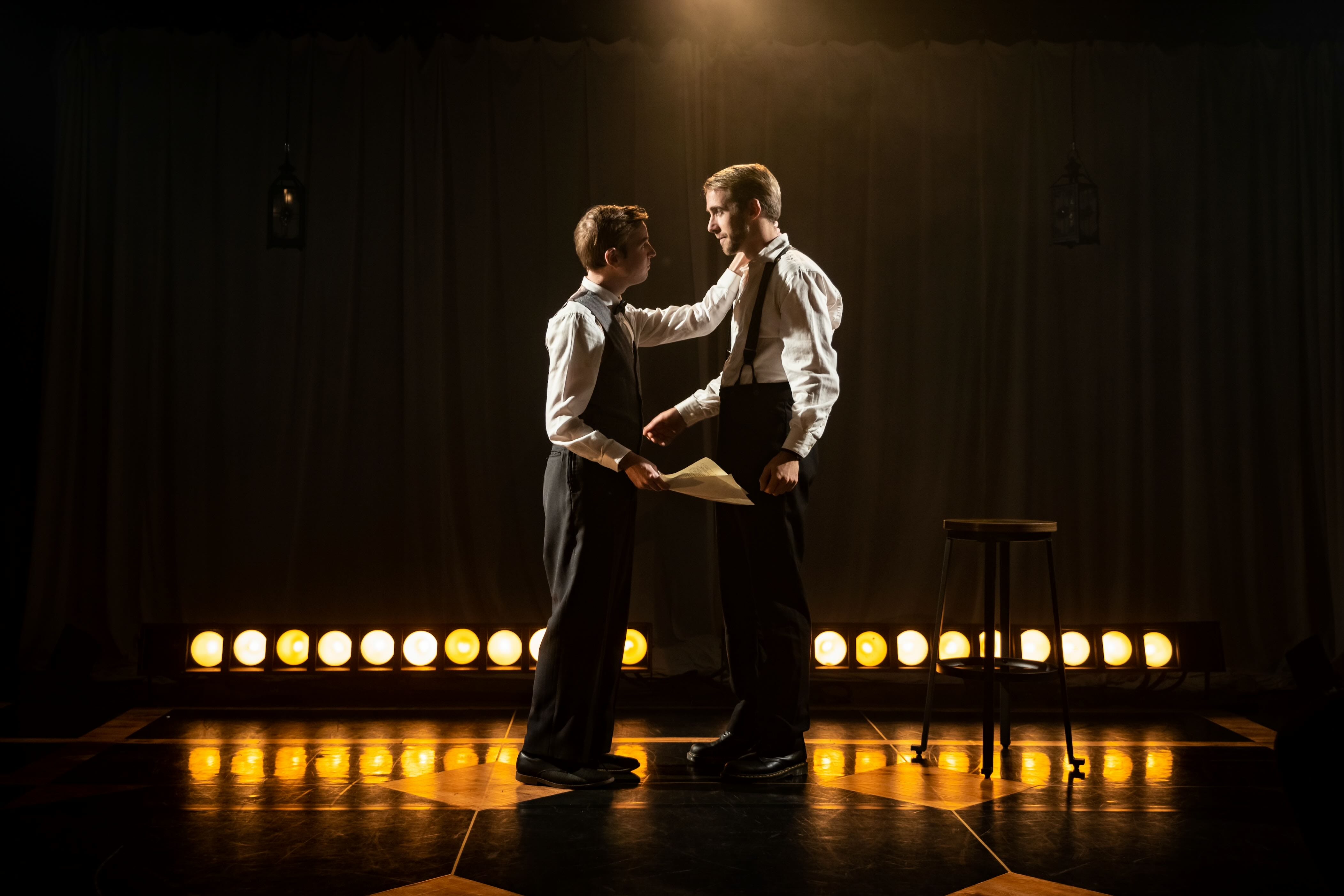
When I was writing applications for an adaptation of ghost stories by Edith Wharton, a program director advised me to write about my identity as a gay man and how that related to why I wanted to adapt Wharton’s stories for the stage. That felt manipulative, as if I was saying, “This project should receive funding because I am a victim.”
I want my art to be selected for funding because my ideas are worthy, because I’m doing something that few other artists are doing, because I have talent and skill, because I have a track record of achievement, and because I’ve persisted despite facing many challenges from the beginning of my career.
In the early 1990s I was an undergraduate studying musical theater in New York City. One night at a party, a classmate said she wanted to talk to me about something “heavy.” She pulled me out of earshot of the other partygoers and said, “Do you know my professor works on [a big Broadway musical that all the young actors want to be in]? He knows who you are because he’s seen you in shows at [our university]. He said you’re very talented and the right type for [the big Broadway musical], but you’re too gay acting to get cast.”
That was devastating news—not only because I desperately wanted to be in that show, but because someone sitting in the audience thought, “his demeanor is disqualifying.” At a young age I had to accept there was nothing I could do if this theater professional—who could unlock doors to a career I craved—was unwilling to do so because I was, in his opinion, “too gay acting.” In the early 1990s, being perceived as gay could be detrimental to career advancement in many fields—even the theater.
I could have quit the business right then and there. Instead, I went to auditions—as many as I could fit between classes. Ironically, my first professional job after graduation was a touring production of the musical I was told I was “too gay acting” to be cast in. I continued to work as an actor and later became a director and producer. Over the course of many decades in the theater I’ve seen numerous changes. One of the most profound is that the profession now takes a dim view of discriminating against flamboyance.
I tell this story because it shaped how I think about identity. Long before arts funders encouraged me to foreground my sexual orientation, I experienced the costs of being defined by it. Over time, my sense of self expanded well beyond that single characteristic, and I was not altogether thrilled to narrow that complexity down to one trait in pursuit of grant funding.
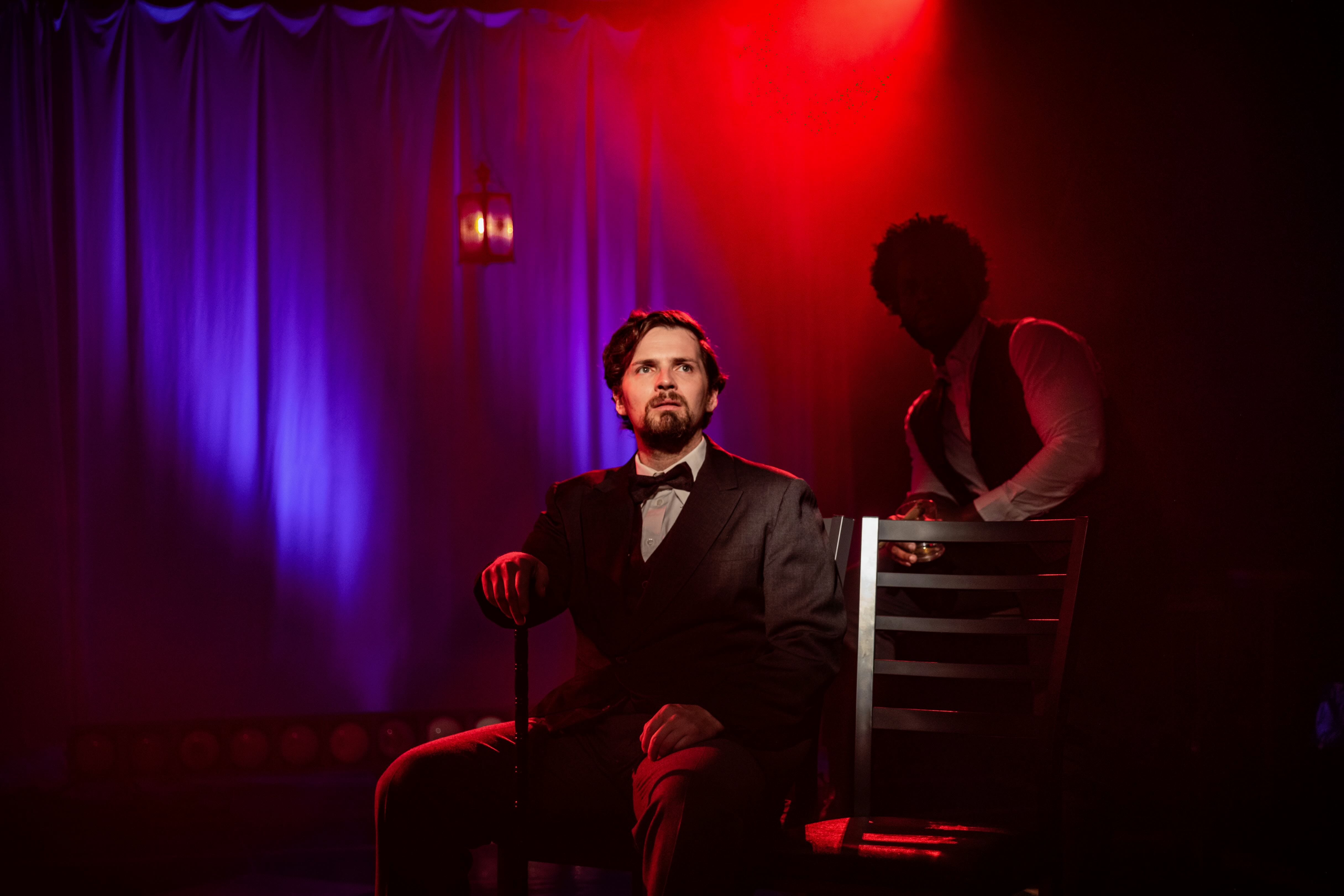
Nevertheless, it was true that “The Eyes,” one of the four gothic tales I intended to include in my Wharton adaptation, contained a strong undercurrent of repressed homosexuality, and it was also true that I was drawn to the story because of that undercurrent. Foregrounding my identity in the grant application in this manner made me uncomfortable, but it wasn’t a lie. If it meant the difference between getting funding for the project or not, I rolled dice laced with identity on the chance my number might come up.
It did—twice. They were both modest grants, but enough to get things moving, and in 2021 I self-produced my first show—Unearthly Visitants.
Identity haunted me once more when I applied for funding to adapt E.M. Forster’s science fiction story “The Machine Stops.” Though Forster was homosexual, his masterpieces are not directly about the ways in which the society and culture he lived in barred gay men from living and loving in public view. Instead, his novels, particularly Howards End (1910), depict heterosexual characters navigating the restrictions Edwardian standards imposed on the broader culture. Through them, he expressed—indirectly—the limitations placed on gay men and lesbian women, and how these restrictions diminished their ability to flourish through human connection.
Remarkably, Forster’s novel Maurice (1971)—which explicitly tells the story of gay men in the Edwardian era—was not published until after his death, in large part because he feared the public reaction. Was playing his cards from beyond the grave an act of cowardice? Or does it prove Forster knew exactly when not to show his hand? I suspect he understood the limitations on his work provided an opportunity to make his personal plight visible to a larger audience—one that might have rejected a novel featuring gay characters.
Knowing the rich history of coded longing in Forster’s work, I positioned him in my grant applications for “The Machine Stops” as a personal hero—which was true.

I’ll never know to what extent the grant panels who approved funding for my first two projects were swayed by the way I deployed identity. It may have been the deciding factor, or it may have played a negligible role. Either way, I was uncomfortable with what felt like an obligation to display identity in service of convincing evaluators that I’m an artist worth funding.
I began to wonder if foregrounding my identity was limiting the content of what I could create. Was I being told, “We won’t fund your art unless it relates to your identity, so find projects that are either about being gay or are adaptations of work by gay authors”? Why should my artistic output be limited to one topic? Are funders telling me I can’t make theater that has nothing to do with being gay? What if I want to make a play about math? Was I being told that if I want to make a play about math, since I’m gay, it better have something to do with Alan Turing?
I am far from the first artist to wrestle with this tension. In the documentary Every Act of Life (2018), a clip from a panel featuring legendary playwrights Terrence McNally, Edward Albee, and Lanford Wilson captures an incisive observation by McNally:
It’s very convenient for critics to call the three of us gay writers, because it fits us into a little compartment. Imagine how absurd it would be to call Arthur Miller or David Mamet “straight writers.” It shows how marginalized gay men and lesbian women are in our society.
McNally raises an uncomfortable question: if labeling artists by minority status risks confining them to compartments, what happens when arts organizations encourage artists to foreground those same labels in pursuit of funding? Can a grant intended to expand opportunity also constrain creative freedom? Does it function simultaneously as both a ladder and a cage?
Drawing from a Different Deck

Things changed with my third production, an adaptation of Russian heretic Yevgeny Zamyatin’s banned dystopian novel We. At last I submitted grant applications that didn’t rely on gay identity in the content of the work or in the identity of the literature’s author.
Zamyatin enticed me because we shared heretical dispositions. He used the dystopian world of We to critique the absurdities of the encroaching Soviets and to warn his fellow Russians about the regime’s looming danger. His outspokenness was daring and potentially lethal. Not only was We banned by the Russian authorities, Zamyatin was so defeated by his colleagues’ unwillingness to publish any of his work that he wrote a letter to Stalin asking to leave the country he dearly loved—a wager made in a state where the rules could change at the whim of a corrupt croupier. Luckily for Zamyatin, Stalin folded.
Though my circumstances were not mortal, I had already experienced personal and professional consequences for going against the grain by the time I submitted my first grant application for We. I’d made it known I was not willing to go along with the popular identity politics that had swept through the arts sector during the pandemic era, and I could see echoes in the twenty-first century of what Zamyatin had written one hundred years earlier in “I Am Afraid” (1921):
…true literature can exist only where it is created, not by diligent and trustworthy officials, but by madmen, hermits, heretics, dreamers, rebels and skeptics. But when a writer must be sensible and rigidly orthodox, when he must make himself useful today, when he cannot lash out at everyone, like Swift, or smile at everything, like Anatole France, there can be no bronze literature, there can be only a paper literature, a newspaper literature, which is read today, and used for wrapping soap tomorrow.
I agree with Zamyatin that the most meaningful art is not created by orthodox true believers imposing and maintaining a status quo monoculture through their artistic output. The most meaningful art I’ve seen was created by outsiders who used their work to critique the mainstream.
I did not display my sexual orientation to secure funding for We, yet the project received the most grant funding I had secured to date.
I imagined a gimlet-eyed Zamyatin sitting across from me at a felt-covered table, his slight smile letting me know there were still corners of the casino where playing identity cards wasn’t the strongest hand.
The Table Turns Again

Over the past year, I’ve applied for several grants to fund my fourth project, an adaptation of Hope Mirrlees’s high fantasy novel Lud-in-the-Mist (1926). I’ve had some success: out of nine submitted applications, two were awarded. But the project is still under-funded, so I’ve continued pursuing opportunities that may yield additional support.
That created a stressful year, so I took time between writing grants to feed my artistic soul through creative writing. The result was NOISE/QUIET, a cycle of nine short plays exploring human connection in the digital age.
I used the skills I acquired crafting literary adaptations to write in my own voice. Perhaps most influential was Zamyatin. Like him, I wrote from an outsider perspective—questioning why social media drives mob mentality, why people choose conspiracy theories to make sense of a chaotic reality, and what motivates some to discard cultural treasures in favor of replacements that may be less than enriching to the soul. I was so pleased with the result that I published the cycle on Substack.

When I saw an LGBTQ+ playwright grant opportunity, I realized I could apply with NOISE/QUIET as my work sample. I chose it over my adaptations because it was written entirely by me, so it demonstrated artistic evolution. Writing the application, I wondered if they would give it serious consideration since none of the plays in the cycle are explicitly about sexual orientation.
Then I had an unsettling thought: “I wrote nine short plays, and not one of them explored gay identity—why is that?”
Perhaps it’s because sexual orientation is not the animating driver of my consciousness in the way it was when I was young. The early 1990s in New York City was a magical time and place for self-discovery. Gay culture seemed to be expanding in every direction. Independent films, Off-Broadway plays, Broadway productions, bookstores, bars, clubs, and coffee shops created the feeling that a new world—made just for me—was bursting into life. There were places to go, things to do, and men to meet. For a twenty-something trying to understand himself, the city felt electric with possibility.
As exciting as that time was, it also radiated with danger. Attending gay-themed films and plays, drinking and dancing in gay bars and clubs, or publicly marching with thousands of out and proud people at the annual Pride parade felt like acts of resistance in the face of external threats. The GOP had aligned itself with a fundamentalist Christian constituency that vehemently attacked homosexuals—Pat Buchanan spoke directly to them from center stage at the 1992 Republican National Convention in his infamous “Culture War” speech. In this era, there were few openly gay or lesbian celebrities because coming out could destroy careers—and everyone knew it. President Clinton’s “Don’t Ask, Don’t Tell” policy and his willingness to sign the Defense of Marriage Act were deeply demoralizing. Worst of all, HIV infections continued to rise. The specter of death seemed to hover over every intimate act, and there was no effective treatment in sight.
Today, external threats to gay thriving seem far less acute than they once were. Did the twenty-something me in the 1990s, who was “too gay acting” to work in the theater, ever think he’d see the day when same-sex marriage was legal, that an effective treatment for HIV would emerge, or that an openly gay man would run for president and win the Iowa caucus? No, he did not.
When I do think about gay identity and threats to thriving today, it is in painful recognition that hard-won acceptance is being undermined by a small but loud contingent of activists from within the LGBTQ+ population. Maybe that would make rich source material for a play exploring gay identity in the twenty-first century, but the idea of spending time immersed in content teeming with activist grievance simply repels me. I’m more interested in other subjects.
What troubles me most is that identity seems to have become the most valuable chip in the arts funding game at the exact moment when I’ve become least interested in my own identity.
If I could speak directly to funders, I would say: “Let me compete for grants based on what I can do, not on who I am. I have agency over my work—what material I choose, how I develop it, who I collaborate with, and the amount of time I commit to challenging myself in order to evolve my craft. I have no control over the aspects of my identity you prioritize through evaluation criteria.”
I didn’t think that level of candor would persuade this particular grant panel, so I crafted a line of artistic evolution that explained how NOISE/QUIET fit into the context of my work.
I promised readers a behind-the-scenes view with this publication. To that end, here is what I submitted as my artistic statement:
As a gay theater artist (director, devisor, playwright) working outside institutional theater, I’ve spent my career drawn to voices who understood exclusion from the inside—Edith Wharton spent twenty-five years in a loveless marriage writing about the cage society built around female ambition; E.M. Forster spent his career coding his own longing into heterosexual characters because the world wasn’t ready for his honest story; Yevgeny Zamyatin had his work banned and died in Soviet exile for daring to question the state. My first three productions were adaptations of these writers’ work because their preoccupations were mine: how systems manufacture belonging by defining who doesn’t belong, and what it costs the individuals caught in that machinery.
My background is in devising—building theater through extended collaboration with designers and performers, allowing form to emerge from exploration in rehearsal. Through devising I developed my dramaturgical instincts: how image, sound, and space illuminate what text alone cannot express. Those instincts eventually demanded their own voice. Devising taught me how plays think. Playwriting taught me to speak for myself.
NOISE/QUIET marks a creative turn: after three adaptations, I stopped channeling other people’s outsider vision and wrote from my own. Nine formally distinct plays threaded by a continuous sound design functioning as the evening’s nervous system. The cycle asks what human connection survives systems designed to overwhelm, distract, and isolate. May and June, two women in a medical waiting room, are its beating heart: proof that even inside the machinery, people find each other.
Does the House Always Win?

I submitted the best application I could craft. The funder only selects one LGBTQ+ writer per year so, even if it’s the top work on the table, the odds are not in my favor. I threw my hat in the ring anyway.
After I clicked submit, I understood the outcome was out of my hands. The best I can do is put it out of my mind and move on to other applications and, most importantly, figure out how to get my adaptation of Lud-in-the-Mist up and running on limited resources.
Still, the act of applying has stayed with me. It agitated me to the point of writing this essay. Since I clicked submit I’ve wondered, “Am I a hypocrite?” Maybe.
At the same time, I can’t control the priorities of funders. If I walked away from the table every time I had ethical objections to funding criteria, I may be preserving my principles, but I’d surely be an artist who isn’t producing much work.
For that reason, I stay seated at the table. I may have objections to the rules of the house, but I’ll play the hand I’m dealt. If my number comes up, I’ll have resources to mount a show that will play in front of an audience. Through that show, I’ll have an opportunity to critique the very ideas I’ve said I oppose in this essay.
Wouldn’t that make me a winner in the end—regardless of my identity?
Independent theater needs champions. Your tax-deductible donation to KEVIN RAY | WORKS makes fearless new work possible.
I also want to say that it is the same in publishing. When I was a school librarian, I welcomed a slew of new voices from black and queer authors when there was very little out there to buy or read. My students were hungry for it. But like sharks in the water smelling blood, the publishers found a new wave of profitability from these writers to the exclusion of other new voices. They were heralded by the cancel culture crowd. And now, I can't pick up an interesting title without an LQBTQIA protagonist or theme. The glut is neaseating and tiresome. And this is what creates backlash.
Excellent essay, Kevin! This floored me: "In one recent application, artistic merit accounted for only 25% of the evaluation rubric." Wow. Rooting for you and Lud-in-the-Mist!